Floating Solar Feasibility Playbook
Screen a floating solar site fast with a scorecard, cost levers, and permit checks. Build a 1-week go/no-go memo.
Floating Solar Feasibility Playbook
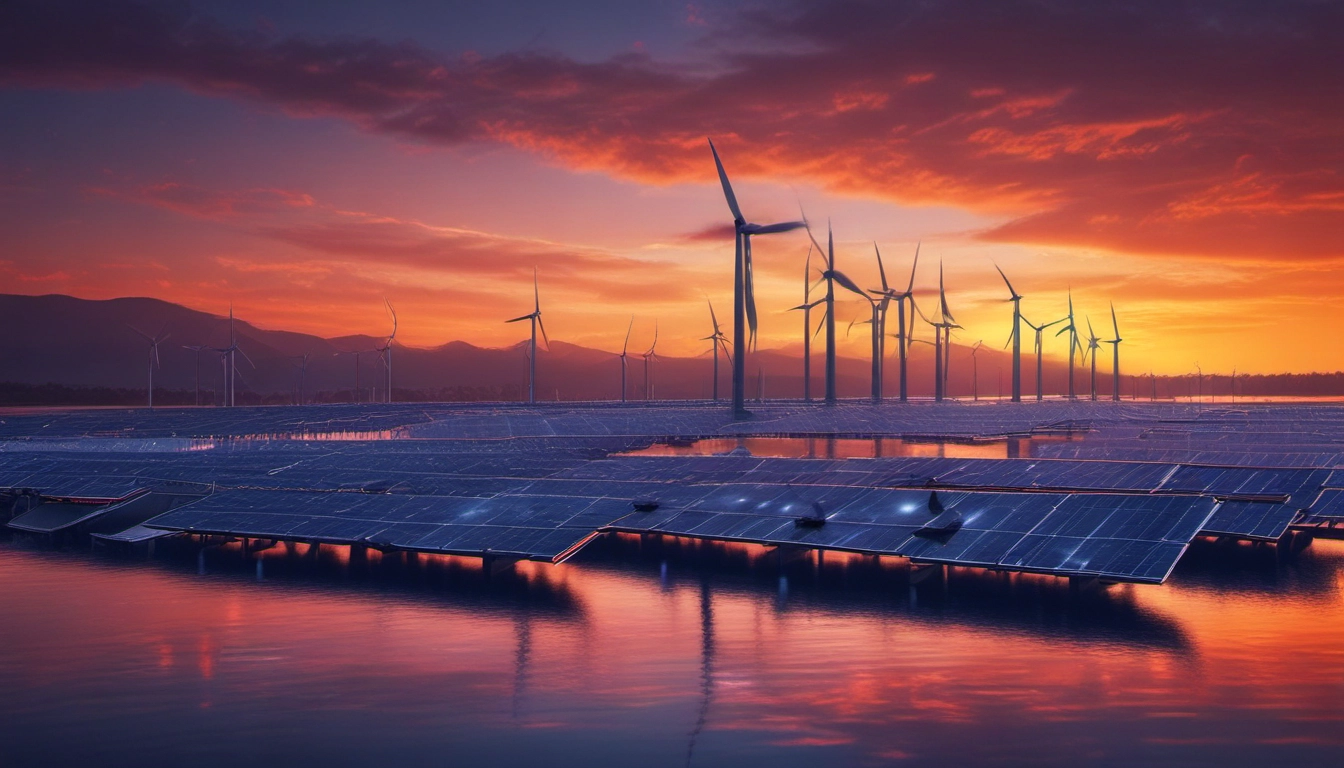
Floating solar (also called floating photovoltaics, floating PV systems, FPV solar, or floatovoltaics) puts standard solar panels on a floating platform on calm water. It helps you add solar power when land is scarce or hard to permit. This playbook shows how to screen a site fast, understand cost drivers, plan for permits, and avoid common risks.
- Works best on: man-made reservoirs, quarry lakes, industrial ponds, wastewater basins, and cooling ponds.
- Why it can outperform land solar: water cools panels, and the cooling effect can raise output by about 5% to 15% in many cases (site dependent).
- Main tradeoff: floating solar can cost more up front because of floats, mooring/anchoring, and water-based construction.
- Fast next step: use the scorecard below to get to a clear go/no-go in 30 minutes, then write a 1-week feasibility memo.
Download-ready artifact: Copy the scorecard, paste it into a spreadsheet, and score your water body.
How do floating solar panels work on a reservoir?
A floating solar farm uses the same PV modules as land solar. The difference is the support system: panels sit on buoyant platforms (often HDPE floats or pontoons) that link together like rafts. The raft is held in place with mooring lines and anchoring, and power cables run to shore for inverters and the grid connection (onshore interconnection).
Core parts of a floating PV system
- PV modules: standard panels; sometimes bifacial solar panels on water to catch light from both sides.
- Floating structure: modular floats (commonly HDPE) and racking.
- Mooring + anchors: designed for wind, waves, and changing water level.
- Electrical: string cables, combiner boxes, inverters (often on shore), and step-up transformers.
- Access + safety: docks, boats, rescue plans, and lockout/tagout rules adapted for water.
One data point that matters
The U.S. National Renewable Energy Laboratory has estimated that federally controlled reservoirs alone could host about 77,000 MW of floating solar capacity, producing about 1,476 TWh per year. Practical implication: there are many possible sites, but the best sites are the ones with calm water, good access, and short interconnection distance.
Where is floating solar a good fit (and where is it a bad fit)?
Floating solar is usually best on calm, inland water. Open ocean is much harder because of strong waves, salt corrosion, and storms. Many early projects focus on man-made water bodies because rules and water conditions are more predictable.
Good-fit water bodies
- Municipal drinking water reservoirs: when land solar is limited and evaporation reduction helps water supply (but permitting can be strict).
- Wastewater treatment plants: a strong match because ponds are already managed and power demand is on-site.
- Hydropower reservoirs: a strong match because you may reuse transmission and interconnection.
- Quarry lakes and former mining pits: useful when nearby land is constrained or contaminated.
- Industrial cooling ponds and remediation ponds: “dead space” that can become a power asset.
- Agricultural reservoirs and canals: potential to reduce water loss.
Common bad-fit conditions (yellow or red flags)
- High wind fetch: long, open water where wind can build large waves.
- Severe ice: thick ice and ice movement can damage floats and mooring.
- Very large water-level swings: big seasonal changes increase mooring loads and cable movement.
- Heavy boat traffic: safety and collision risks.
- High environmental sensitivity: protected species, critical habitat, or tight fisheries rules.
- Very long interconnection distance: expensive cabling and higher electrical losses.
FPV site screening scorecard (30-minute go/no-go)
Use this to screen any site: reservoir, pond, lake, basin, or quarry lake. Score each item 0 to 3, total the points, and use the rubric at the end.
FPV Site Screening Scorecard (0-3 each)

A) Water body and conditions
1) Wind fetch and wave exposure: 0=high, 3=low
2) Depth and bathymetry known: 0=unknown/hard, 3=surveyed/clear
3) Water-level swing (seasonal): 0=high, 3=low
4) Ice risk: 0=high, 3=low
5) Water quality (corrosion/biofouling risk): 0=high, 3=manageable

B) Use and restrictions
6) Drinking water or special restrictions: 0=very strict, 3=manageable
7) Navigation and recreation conflicts: 0=high, 3=low
8) Operations impact (treatment, pumps, dam access): 0=high, 3=low

C) Buildability
9) Shore access for staging and cranes: 0=hard, 3=easy
10) Cable route to shore and trenching: 0=hard, 3=easy
11) Local contractor capability: 0=none, 3=experienced/strong plan

D) Grid and value
12) Interconnection distance to POI: 0=far, 3=close
13) Existing transmission reuse (hydro/plant): 0=no, 3=yes
14) Power value (load match, tariffs, REC): 0=low, 3=high

Total score (max 42):
- 0-20: No-go (or major redesign needed)
- 21-30: Maybe (needs surveys + permitting pre-check)
- 31-42: Likely go (start feasibility memo and early engineering)
Tip: If you score low on interconnection, do not force the project. Electrical distance can erase the benefits of floating solar.
How much does floating solar cost, and what drives the CAPEX premium?
Floating solar often has a higher up-front price than ground-mounted PV. A common range discussed in industry is a 50% to 100% CAPEX premium for floating projects versus simple ground-mount. The premium is driven mainly by specialized hardware and water-based installation, and it can shrink on repeat projects, calm sites, and larger systems.
Cost driver table (what changes the price fast)
| Cost driver | What it is | What raises cost | What lowers cost |
|---|---|---|---|
| Floats and racking | HDPE floats, connectors, walkways | High waves, heavy access needs | Standard modular platform, calm site |
| Mooring and anchoring | Anchors, lines, load analysis | High wind fetch, deep water, big level swings | Short fetch, known bathymetry, stable levels |
| Electrical | Marine-grade cable, grounding, protection | Long cable routing and onshore interconnection | Short route, shore-based inverters near POI |
| Installation logistics | Docks, boats, assembly method | No staging area, hard shoreline | Good laydown area, simple launch plan |
| O&M and insurance | Inspections, cleaning, storm plans | High storm risk, limited access | Protected water body, strong O&M plan |
Break-even worksheet: when does FPV pencil out?
Floating solar can win when added benefits pay for the premium: higher energy yield, avoided land costs, faster permitting, or value from water benefits. Use the simple check below to estimate whether the premium is justified.
- Estimate the CAPEX premium (extra $) versus a land system.
- Estimate the annual value lift (extra $ per year) from: (a) more kWh from cooling and bifacial, (b) avoided land lease, (c) faster interconnection, (d) avoided vegetation work, and (e) water value (evaporation and algae).
- Premium payback (years) = CAPEX premium / annual value lift.
Example (simple numbers): If a 5 MW floating PV system costs $2,000,000 more than land solar and creates $250,000 per year in extra value, the premium payback is 8 years. If your contract runs 20 to 30 years, that may be acceptable.
Practical implication: Do not assume the cooling effect alone pays for floating solar. Treat cooling as a bonus, not the whole business case.
What coverage ratio should you use on a reservoir?
Coverage ratio means the percent of water surface covered with floating solar panels. Many studies discuss 10% coverage as a useful reference point for large-scale potential. In real projects, the right number depends on rules, water uses, and ecology.
Coverage ratio guidelines (simple starting points)
- Start conservative: aim for a small pilot area first, especially on drinking water.
- Keep buffers: leave space near shorelines, dam intakes, and recreation zones.
- Plan for wind lanes: do not create one giant sail; break arrays into blocks if needed.
- Model heat and water mixing: more shading can change water temperature patterns.
Floating solar vs ground mounted solar: pros and cons
This comparison is most useful for early decisions. Use it to communicate the core tradeoffs to stakeholders who are familiar with land solar but new to FPV.
Pros (why teams choose floating solar)
- No loss of valuable land space: useful when land is scarce.
- Better performance in heat: water cooling helps offset PV temperature coefficient losses on hot days.
- Water benefits: can reduce evaporation and may reduce algae blooms through shading (site dependent).
- Hydro synergy: may reuse grid infrastructure and reduce interconnection friction.
- Modular: easier to expand from a pilot to larger phases if the pilot works.
Cons (why projects fail)
- More engineering: mooring design, hydrodynamic checks, and marine electrical choices.
- Higher up-front cost: floats and anchoring raise cost compared to basic ground mount.
- Harder construction: crews work on docks and boats, so training and safety are critical.
- Ecology complexity: environmental impacts vary by location, especially for fish habitat and water temperature layers.
Solar-hydro hybrid value map (when to pair FPV with hydropower)
Floating solar often fits well on hydro reservoirs. Solar produces in the day, and hydro can shift to evening or peak hours. If the site is pumped storage, it can act like a pumped storage hydro battery by storing energy as water height.
Where the hybrid creates value
- Interconnection and transmission reuse: you may connect using existing hydro lines and substations.
- Less curtailment: hydro can back down when solar is strong, then ramp later.
- More firm supply: the combined plant can look steadier to the grid.
- Shared operations: one site team can manage both assets.
Simple operating modes
- Daytime solar, nighttime hydro: basic load shifting.
- Solar supports pumping (pumped storage): pump when solar is high, generate when prices are high.
- Seasonal balancing: solar helps during dry periods when hydro is limited.
Environmental impacts and permitting checklist (reservoir-specific)
Floating solar can help by shading water and lowering evaporation, but it can also change water temperature and mixing. Effects differ widely by reservoir depth, circulation, and species. Plan for a site-specific approach rather than relying on generic assumptions.
Environmental impact and monitoring checklist
- Baseline data: water temperature by depth, dissolved oxygen, algae indicators, and fish surveys.
- Modeling: basic hydrodynamic modeling if coverage is large or the reservoir is ecologically sensitive.
- Shading plan: pick spacing and coverage to avoid harming key habitat zones.
- Materials plan: use corrosion-resistant parts and consider anti fouling coatings where biofouling is likely.
- Construction timing: avoid fish spawning seasons and sensitive periods.
- Storm and spill response: define how you prevent and respond to debris, float damage, or oil leaks from boats.
- Monitoring after build: set a schedule (monthly in year 1, then quarterly) and trigger thresholds for action.
Permitting notes by water body type
- Drinking water reservoirs: expect stricter rules on materials, access, and water quality. Early meetings with the water authority are critical.
- Wastewater ponds: focus on operations continuity, gas venting, and safe access for plant staff.
- Hydro reservoirs: coordinate with dam safety, intake zones, spillways, and navigation rules.
Practical implication: If you cannot get agreement on baseline monitoring, you are not ready to build. Monitoring is how you keep trust with regulators and the public.
Ownership and contracting: PPA vs lease vs municipal owned floating solar
Floating solar projects in the U.S. often use third-party models like a power purchase agreement (PPA) or a lease. Some cities also explore public ownership to keep more long-term savings. The best model depends on tax benefits, risk tolerance, and operational capacity.
Ownership model decision matrix
| Model | Who owns the system? | Who captures tax credits? | Best for | Main risk |
|---|---|---|---|---|
| PPA | Developer | Developer | Fast start, low upfront cost | Less long-term savings for site owner |
| Lease | Developer (usually) | Developer (usually) | Simple site monetization | Lease terms can limit future changes |
| Municipal/utility ownership | Public owner | May be limited (depends on structure) | Long-term cost control, local benefits | Upfront capital and O&M responsibility |
If you are comparing municipal ownership vs PPA, ask one question: who captures the biggest financial benefits? In many cases, tax credits and depreciation favor private ownership, but grants or special financing can shift the outcome.
O&M: what changes when solar is on water?
Floating PV systems remove some land tasks (like mowing) but add water tasks (like float checks). Plan O&M early to protect performance and keep insurance affordable. Treat access, weather response, and electrical inspection as first-class workstreams.
Common O&M challenges and solutions
- Corrosion: choose marine-grade parts, plan inspections, and watch grounding and bonding.
- Biofouling: growth can build on floats; keep walkways clear and inspect connections.
- Storms and high winds: maintain a weather response plan and post-storm inspection steps.
- Cable wear: manage bend radius, protect moving sections, and check for abrasion.
- Access safety: train crews for water work and rescue procedures.
Mini case study table: real floating solar projects (comparable facts)
| Project | Location | Size | Water body type | What to learn |
|---|---|---|---|---|
| Healdsburg Floating Solar Farm | California | 4.78 MW | Ponds | City-scale FPV can cover a meaningful share of local load. |
| Canoe Brook | New Jersey | 8.9 MW | Water treatment reservoir | A strong match for treatment plants with steady daytime demand. |
| Fort Liberty | North Carolina | 1.1 MW + 2 MW storage | Lake | FPV + batteries can support resilience goals on controlled sites. |
| O’MEGA 1 | France | 22 MW | Man-made water body | Large FPV can scale with the right platform and permitting path. |
1-week feasibility memo workflow (repeatable playbook)
Use this process to move from “interesting idea” to a defensible decision. Keep outputs lightweight and focused on go/no-go risks. If a step reveals a fatal constraint, stop early and document the reason.
Day 1: Site screen
- Fill in the scorecard.
- Pick a draft coverage ratio and array area.
- Confirm basic ownership of the water surface and shore access.
Day 2: Desktop engineering
- Map wind fetch and storm exposure.
- Review known depth and water-level data, and schedule bathymetry if missing.
- Draft a concept for mooring and anchoring design basics (do not finalize without a specialist).
Day 3: Electrical and interconnection
- Sketch cable routing and onshore interconnection.
- Estimate distance to point of interconnection (POI) and any needed upgrades.
- If near hydro, list options for interconnection and transmission reuse.
Day 4: Permitting pre-check
- List agencies and permits.
- Draft your baseline monitoring plan and mitigation ideas.
- For drinking water, confirm approved materials and access rules early.
Day 5: Economics
- Build a simple pro forma using the cost driver table.
- Test two cases: conservative yield and upside yield (cooling + bifacial).
- Run the break-even premium payback check.
Days 6-7: Choose a path and write the memo
- Go: request early engineering quotes and start stakeholder outreach.
- Maybe: order surveys (bathymetry, geotech at anchor points, ecology baseline).
- No-go: document why (often wind fetch, interconnection distance, or restrictions).
RFP outline (what to ask EPCs and FPV suppliers)
- Site data needs (wind, waves, water levels, bathymetry).
- Mooring concept and load cases.
- Float platform type (HDPE floats, walkways, tilt, grounding approach).
- Electrical single-line and safety plan.
- O&M plan, spare parts, and inspection schedule.
- Warranty terms for floats, connectors, and mooring hardware.
- Environmental monitoring support (baseline + post-build).
FAQ: quick answers to common floating solar questions
What is floating solar?
Floating solar is a solar array that sits on a floating structure on water and is anchored in place. It is also called floating photovoltaics (FPV) or floatovoltaics.
Do floating solar panels really make more energy?
Often yes, because water cools panels and heat lowers output on hot days. Many sources cite a 5% to 15% boost, but results depend on site, design, and weather.
Does floating solar reduce evaporation?
It can, because panels shade the water surface. The real value depends on climate, water rules, and how much of the surface you cover. Treat it as a benefit to quantify rather than a guarantee.
What are the biggest technical risks?
Mooring failure in storms, cable damage, corrosion, and poor access for maintenance are common risks. A strong design and O&M plan reduce them. Conservative load cases and clear inspection routines help protect reliability.
Is floating solar good for the environment?
It can be, but effects vary by reservoir. Some sites see reduced algae and cooler surface water, while others may see changes in habitat. Site-specific monitoring is essential.
Next step: Use the scorecard above and share it with your interconnection lead, water operator, and an FPV mooring specialist. In one week, you can decide whether your site is a real candidate for a floating PV system.